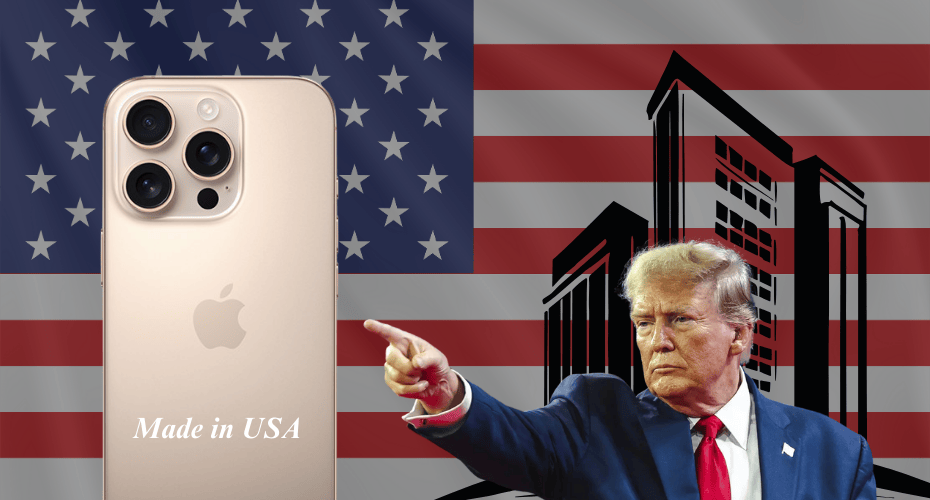
Trump’s Statement: Bring iPhone Manufacturing Back to the U.S.
U.S. President Donald J. Trump recently made headlines with a bold statement directed at Apple CEO Tim Cook. He said he expects all iPhones sold in the United States to be manufactured within the United States.
According to him, Apple should be required to pay a 25% tax on each imported iPhone if it does not produce them in the United States. This comment generated a lot of discussion about potential new taxes, bringing tech manufacturing back to America, and the possible impact on Apple’s manufacturing operations.
But what does this mean for American consumers, Apple, and the tech industry?
Made in America: Can Apple Really Manufacture iPhones in the U.S.?
The topic of manufacturing iPhones in the United States is not new. Apple has been under increasing pressure to shift more of its manufacturing to the United States over the years. However, putting together a complicated product like the iPhone requires a global supply chain and thousands of parts.
Compared to manufacturing areas like Asia, labor costs in the United States are significantly greater. Moreover, a large number of parts used in iPhones, such as chips, sensors, and screens, are produced elsewhere. It would require years of investment and billions of dollars to set up the infrastructure necessary to duplicate this in the United States.
Apple’s Past Push Toward U.S. Assembly
Apple is not entirely new to American manufacturing. The Mac Pro was produced by the company at its Austin, Texas, facility. Likewise, Apple has made significant investments in other U.S.-based facilities for component production, research, and development. Still, only a tiny percentage of final assembly or parts for iPhones are currently made in the United States.
The question now is whether Trump’s pressure could revive or accelerate Apple’s domestic production plans.
Will iPhone Prices Rise with U.S. Manufacturing or Tariffs?
The short answer? Probably, yes.
If Apple shifts iPhone manufacturing to the U.S., it would face significantly higher production costs. Alternatively, the company may pass on those costs to American consumers if it continues to produce overseas and is subject to a 25% tariff. Price increases of $100 to $200 or more per device might result from that.
Sales of iPhones may be impacted by this, particularly among American consumers on a tight budget. Additionally, Apple may need to change its profit margins or look for new ways to reduce expenses elsewhere.
What a 25% iPhone Tariff Would Mean for Americans
On imported goods, a tariff acts similarly to a tax. Might the 25% tariff were put into effect, Apple would have to either cover the additional expense or pass it along to customers. Due to this, iPhones might not prove as competitive in the US market as Android substitutes.
Moreover, a tariff of this kind might damage Apple’s standing with American leaders and have a greater impact on the tech sector, particularly for other businesses that depend on supply chains worldwide.
Will This Help or Hurt U.S. Tech Jobs?
Trump’s push could, in theory, create more factory jobs in the U.S. But there are two sides to this coin.
Building iPhones in America might add some jobs, especially in assembly. However, the scale of automation in modern factories often means fewer human workers are needed. Also, increased production costs might lead companies to hire fewer people or cut costs in other areas.
On the other hand, more U.S.-based tech manufacturing could boost local economies, increase innovation, and reduce dependency on foreign nations for critical tech infrastructure.
Conclusion: Is Apple’s “Designed in California” Going to Become “Built in America”?
The discussion about iPhone’s Made in USA technological advances has been restored by Trump’s declaration. Even though his demand might not result in Apple moving its whole production line to the United States right away, it might have an impact on decisions down the road, particularly if government incentives or tariffs are put in place.
Whether it’s a political strategy or a genuine attempt to rebuild U.S. manufacturing, one thing is clear: Apple and other tech giants will need to think carefully about how they balance cost, quality, and national policies moving forward.
For now, Americans should stay tuned. Your next iPhone might just come with a new label: “Made in U.S.A.“
FAQs – iPhone Made in USA
Can Apple really make iPhones in the USA?
Yes, it’s possible, but it would take a lot of money and big changes to how Apple gets its parts. Because most of the iPhone parts are still made in other countries.
Will tariffs increase iPhone prices in 2025?
Trump’s call for iPhone Made in USA could lead to a 25% tariff. If applied, this tariff may raise iPhone prices in 2025 unless Apple absorbs the cost.
Get in touch with TechnoByyte for more info.